

A Letter to Mothers About postnatal Health, Hormones and Self-Trust by Dr Jasmin Malek
- Jan 19
- 4 min read

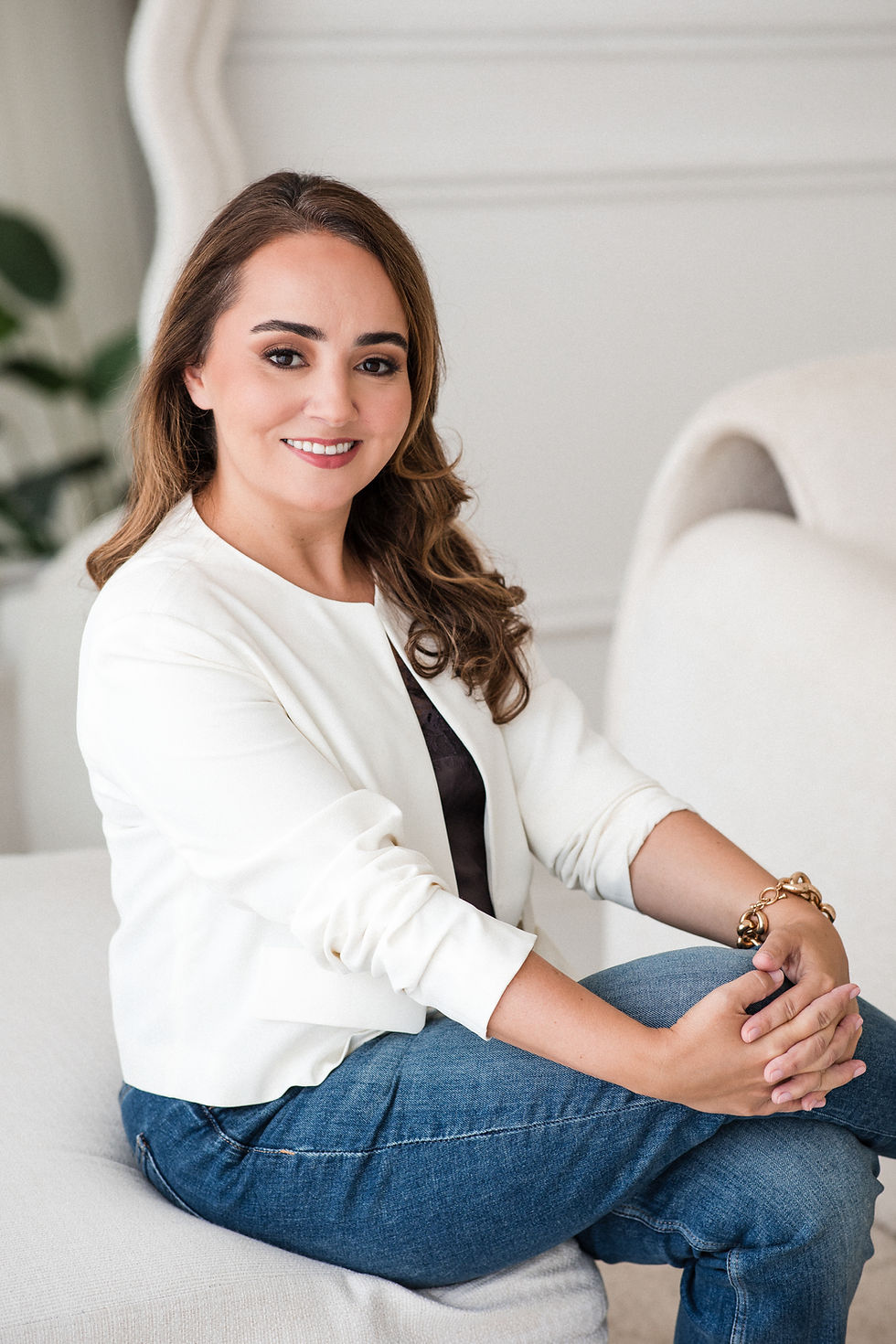
Dr Jasmin Malek is a UK-trained Consultant Physician specialising in Family Medicine, hormone management, metabolic and PCOS health, advanced aesthetics, postnatal health and regenerative medicine.
HERE's what she wishes more mums knew about motherhood...
If there’s one thing I wish more mothers truly knew, it’s this: there is no single way to experience motherhood.
Every mother’s journey is different. And even for the same woman, motherhood can feel entirely different with each child.
A smooth first experience doesn’t guarantee an easy second.
A difficult beginning doesn’t define what comes after.
Comparison, with other mothers, with social media, or even with your own past self, rarely brings comfort. More often, it quietly chips away at your confidence. So if you can, let comparison go. You are not behind. You are not failing. You are simply living your version of motherhood.
I also want you to know this: you already have something deeply powerful – your intuition.
Nature built you to know your child. You don’t need to parent like anyone else. You don’t need to follow every voice or opinion. Doing your best, in your own way, with your own baby, is more than enough.
What we don’t talk about honestly enough is how hard this can be.
Motherhood asks everything of you - physically, emotionally, mentally, hormonally, often all at once. And then it expects you to keep going.
Postnatal depression, anxiety, and profound loneliness are incredibly common. I see this repeatedly in clinic. Yet so many women suffer quietly with their postnatal health, wrapped in shame, telling themselves they should feel happier or cope better.
Struggling is not a weakness. It is a human response to something genuinely demanding.
For some mothers, the experience of birth itself leaves a mark. A long labour. A forceps delivery. An episiotomy. An emergency caesarean. Feeling frightened, unheard, or out of control. These experiences matter. They can stay with you long after your body has healed. And they deserve compassion, not minimisation.
And let’s be honest, motherhood is hard because it is hard. Anyone who tells you otherwise is either forgetting, protecting themselves from the truth, or had a very different baby to yours.
why motherhood is so challenging
Most mothers step straight into caring for a newborn with little to no time to recover, because they have to, and because they love fiercely. But you were never meant to pour endlessly from an empty cup. If things feel heavy, overwhelming, or simply too much, please speak to someone who will listen without judgement or dismissal. Find one safe person. A friend. A doctor. Someone who takes you seriously.
Sleep deprivation alone can unravel even the most resilient person. Add a baby who cries constantly, and it can feel unbearable.
One thing I always encourage mothers to ask, because it is so often missed, is whether their baby could have a cow’s milk protein allergy. Babies with this can cry a lot, and when the crying doesn’t stop, it can make you question everything, including yourself. I know this personally. With my second child, I truly felt like I was losing my mind until we understood what was going on. Getting the right help changed everything.
What women are also very rarely told and something I see more and more is that you can be postnatal and perimenopausal at the same time.
More women are having children in their mid-30s and 40s, and that is a beautiful reality. But it also means the hormonal picture after birth can be more complex. If you’re not feeling quite like yourself, it isn’t always “just exhaustion” or “just motherhood.” Sometimes, it’s worth gently asking: could I also be perimenopausal?
Perimenopause doesn’t arrive with a clear beginning. It can overlap quietly with postnatal changes and be easy to miss.
Symptoms can include:
low mood or anxiety,
tearfulness
irritability
brain fog
poor sleep (even when your baby sleeps)
worsening PMS
low energy
joint aches
changes in libido
palpitations
a sense that your emotional resilience has shifted.
Many women blame themselves for feeling this way. They tell themselves they should be coping better, enjoying things more, bouncing back faster. But if something feels off, it deserves attention, not judgement. Sometimes, simply having a name for what’s happening can be profoundly relieving.
Alongside seeking support, there are small, gentle ways to care for yourself.
Get outside for a walk when you can, fresh air and daylight matter more than we realise. Keep your vitamin D levels supported (and don’t forget vitamin K2 alongside it). Build in guilt-free moments just for you, even if they’re brief. Rest is not selfish. It’s necessary.
And please hear this, because it matters: your baby will be okay. Babies don’t need perfect mothers. They need loving, responsive, present ones and that is already who you are. Even on the days you doubt yourself. Even when you’re exhausted. Even when you cry behind a closed door.
You are a good mother. You are doing enough. And this season, as heavy as it can feel, will not last forever.
Everything will be okay.
Your friend,
Dr Jasmin
//
For More on postnatal health:
Follow @drjasmin.dubai
For appointments contact Healthbay.


Comments